Why the Leading CBSE School in Kanpur Prioritises Coding-Based Education
Every second school in Kanpur now mentions coding. Very few have thought seriously about why it matters, who it is for and what it should actually produce in a child. This blog covers why the leading CBSE school in Kanpur has made coding-based education a genuine institutional priority.
Introduction
When we talk about coding in schools, we must know what problems we are actually trying to solve. Because if the answer is, “we want our children to become software engineers”, then coding is a specialised vocational pathway, relevant to some students and not others. But if the answer is, “we want our children to think clearly, solve unfamiliar problems, understand the systems shaping their world and carry capabilities that compound across any career they choose”, then coding is something else entirely. It is foundational education for the century they are growing up in.
Allenhouse Public School, Panki, has answered that question clearly. As the leading CBSE school in Kanpur, it has prioritised coding-based education not as a technology programme for technically inclined students. As a thinking discipline for every student. And that distinction between coding as a subject and coding as a cognitive framework is what this blog is actually about.
The Problem With How Most Schools Approach Coding
Most schools that add coding to their curriculum do one of two things.
The first is to treat it as a computer science subject. Students learn syntax, write programmes, complete exercises and appear for an examination. The coding happens. The thinking it could develop does not, because the teaching approach treats programming as content to be covered rather than as a process to be lived.
The second is to treat it as an extracurricular enrichment activity. A coding club that meets twice a week for interested students. Optional, peripheral and disconnected from the academic mainstream.
Neither approach produces what coding education is capable of producing. Because coding's real value is not in the programmes students write. It is in the cognitive habits that those programmes require. It is the habits that only develop when coding is approached seriously, progressively and as a genuine priority rather than an addition.
7 Reasons Allenhouse Panki Prioritises Coding-Based Education
As a reputed CBSE school in Panki Kanpur, which has genuinely built coding into its educational philosophy, APS has done something different. Here is what that looks like:
1. Coding Develops the One Thinking Skill Every Career Will Reward
There is a cognitive capability that employers across every industry consistently identify as both critically important and chronically underdeveloped in new graduates. Structured problem decomposition, i.e., the ability to encounter a large, complex, ambiguous challenge and systematically break it into smaller, clearer, actionable parts. This is the first thing coding teaches. Before syntax, before algorithms, before any specific language. And a student who has been building this habit across years of progressive coding education carries a problem-solving framework applicable to every subject and every professional challenge they will ever face.
The thinking framework built through coding transfers directly into mathematics, science and analytical reasoning across subjects
Students develop comfort with complexity, beginning to work through large problems without being paralysed by their scale
Precision in thinking is built through the unforgiving feedback loop of actual code execution, where imprecision produces immediate, visible consequences
Employers across technology, medicine, finance, law and design consistently cite this structured thinking capability as the hardest quality to find and the most valuable to have
2. The Coding Academy Produces Genuine Fluency, Not Superficial Familiarity
Familiarity with coding and fluency in coding are meaningfully different things. A student who has done a few exercises knows what coding is. A student who has built progressively in a structured programme across school years has developed a genuine capability that shows up in how they think, not just in what they can produce when asked. At Allenhouse Panki, the Coding Academy is built around the second outcome: progressive curriculum, real project work and a consistent cycle of building, failing, debugging and improving that embeds the habits of mind genuine fluency produces.
Each year of the Coding Academy curriculum builds meaningfully on the previous one, introducing new complexity as cognitive capability develops
Real project work produces tangible outcomes that demonstrate genuine capability rather than module completion
Debugging and revision practice specifically develops the iterative problem-solving mindset that professional and academic environments reward
The Coding Academy connects to the school's broader STEAM Education framework, amplifying each dimension through the others
3. Coding Is the Language of the World Your Child Is Entering
Every system your child will interact with as an adult, be it banking, healthcare, transportation, communication, entertainment, governance, runs on code. Every career they might pursue will be shaped by software systems they need to understand, even if they never write a single line professionally. A child who grows up understanding how logical systems are constructed, how they fail and how they are improved understands their world differently from one who does not. This is a form of literacy. And the leading CBSE school in Kanpur that has recognised this is not following a trend — it is responding to a reality.
Digital literacy developed through coding produces informed citizens alongside capable professionals
Students who understand how systems are built engage more critically with the technology shaping their daily lives
Coding fluency reduces the gap between a student's technological capabilities and the world's technological expectations
Every career pathway a student might choose will involve digital systems they are better equipped to engage with through coding education
4. Coding Changes How Students Approach Academic Subjects
This is the benefit of coding-based education that is least expected and most consistently observed by teachers who have seen it in practice. When students develop computational thinking through coding, it changes how they approach problems across subjects. Mathematics becomes more about logic and structure, less about formula recall. Scientific investigations become more systematic. Written arguments become more organised. Even language-based subjects benefit from the precision that coding demands. This cross-subject transfer is the result of coding developing a foundational cognitive framework applicable to every domain where a student needs to think clearly.
Mathematics performance improves through stronger logical and structural reasoning developed in the coding environment
Scientific investigation becomes more systematic in students who have practised the coding design cycle regularly
Written argument and analytical composition become more organised through the precision coding required at every stage
Teachers across subjects at Allenhouse Panki observe measurable changes in problem-solving approach in students who have engaged seriously with the Coding Academy
5. The Robotics Connection that Connects to the Physical World
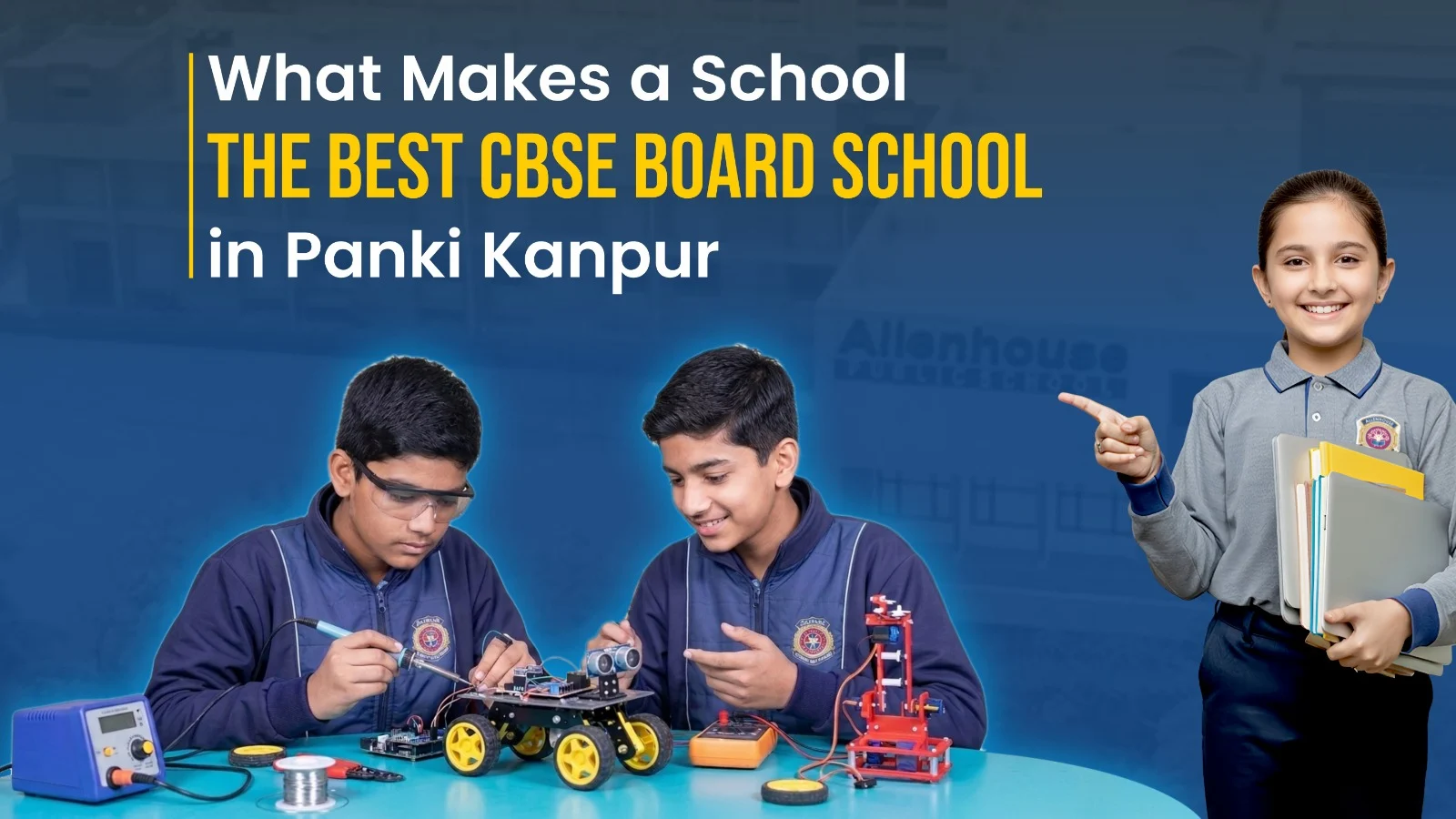
Abstract coding education has genuine value. Coding connected to physical outcomes has a different and additional kind of value that screen-only programming cannot fully produce. When a student writes code and watches a robot execute exactly what they instructed (or fail to do what they intended), the relationship between logical thinking and physical reality becomes immediately and viscerally clear. The abstraction of programming meets the concreteness of a machine in motion. This encounter develops an understanding of cause and effect in computing that is qualitatively different from anything achievable through purely digital coding exercises.
Physical robotics makes the logical consequences of code immediately visible, concrete and undeniable rather than abstract
The engineering design cycle (build, test, fail, diagnose, improve) is practised through robotics in a context where feedback is immediate and tangible
The connection between computational logic and physical systems is developed through direct, hands-on experience unavailable in screen-based coding alone
Robotics competitions give students experience of performing under genuine pressure in a technical domain with real stakes
6. Coding Builds the Portfolio That Opens Doors
University admissions, particularly for engineering, computer science, data science, design and technology programmes, are increasingly interested in demonstrated capability alongside academic performance. A student who can show actual projects, actual code they wrote, actual problems they solved and documented, is in a fundamentally different position from one who can only show marks. The Coding Academy at Allenhouse Panki is structured to produce exactly this. Students build real projects across their school years, arriving at admissions processes with a portfolio of actual work that examination results alone cannot replicate or replace.
Portfolio evidence demonstrates computational thinking and project completion to university admissions offices in a way marks cannot
Coding achievements and documented project work specifically strengthen applications for technology, engineering and design programmes
Demonstrable technical capability differentiates students in competitive admissions where everyone presents similar academic results
Students can articulate the specific problems they solved and the process they used, which is what competitive institutions are increasingly asking for
7. Coding Education Is Most Effective When Started Early
The cognitive benefits of coding education accumulate over time. A student who begins developing computational thinking habits at age eight has significantly more of them by the time they reach Class XI than one who encounters coding for the first time at fourteen. This is precisely why Allenhouse Panki does not treat coding as a senior school skill-building programme. It introduces it progressively from early years, building the cognitive framework that becomes more sophisticated and more powerful as students develop across every stage of their schooling.
Early introduction builds cognitive frameworks that compound in value across school years in ways late introduction cannot replicate
Eight years of computational thinking development produces qualitatively different graduates from two years, regardless of the quality of instruction in both cases
Progressive complexity across school years ensures the cognitive challenge grows with the student rather than arriving all at once
Students who begin coding early arrive at competitive examinations with problem-solving habits that are embedded, automatic and genuinely useful under pressure
Conclusion
The schools that are producing genuinely capable graduates in Kanpur right now are not the ones with the most impressive-sounding curriculum documents. They are the ones that have asked hard questions about what their students will actually need and built their programmes around honest answers.
Allenhouse Public School Panki, has asked those questions. The answer, consistently and specifically, pointed toward coding-based education as one of the most important investments a school can make in every student, regardless of their eventual career direction.
As the leading CBSE school in Kanpur for coding-based education that has built the infrastructure, the curriculum and the faculty development to make that priority real, Allenhouse Panki is preparing children for the world that actually exists. Not the one from ten years ago.
Visit Allenhouse Panki. See the Coding Academy in session. Ask about CBSE school admission fees in Panki. Admissions are open.
Your Queries Answered
1. Why Do Schools Prioritise Coding Education for All Students?
Coding helps students develop problem-solving, logical thinking, creativity and analytical skills that are useful across subjects and future careers. Every leading CBSE School in Kanpur views coding as a tool for building stronger thinking skills, not just technical knowledge.
2. What Is the Coding Academy at Allenhouse Panki?
The Coding Academy at Allenhouse Panki offers structured, progressive coding education through project-based learning, real-world applications and integration with robotics and STEAM activities.
3. What Are the Admission Fees at Allenhouse Panki?
The school provides a detailed fee structure during the admission process. Parents can request a complete breakdown covering CBSE school admission fees in Panki, the tuition fee, activities, transport and other applicable charges during their campus visit or check the fee structure available online.
4. How Early Does Coding Education Begins?
Coding and computational thinking are introduced from the primary years through age-appropriate activities. As students progress, they move on to programming, robotics and advanced technology-based projects.
5. How Does the Coding Academy Connect to Other Programmes at Allenhouse Panki?
The Coding Academy works alongside the school's STEAM framework, Robotics Club and Animation Academy. This integrated approach helps students build technical, creative and problem-solving skills through connected learning experiences.